
EV & electrical
EV chargers and Glasgow tenements: what is actually possible
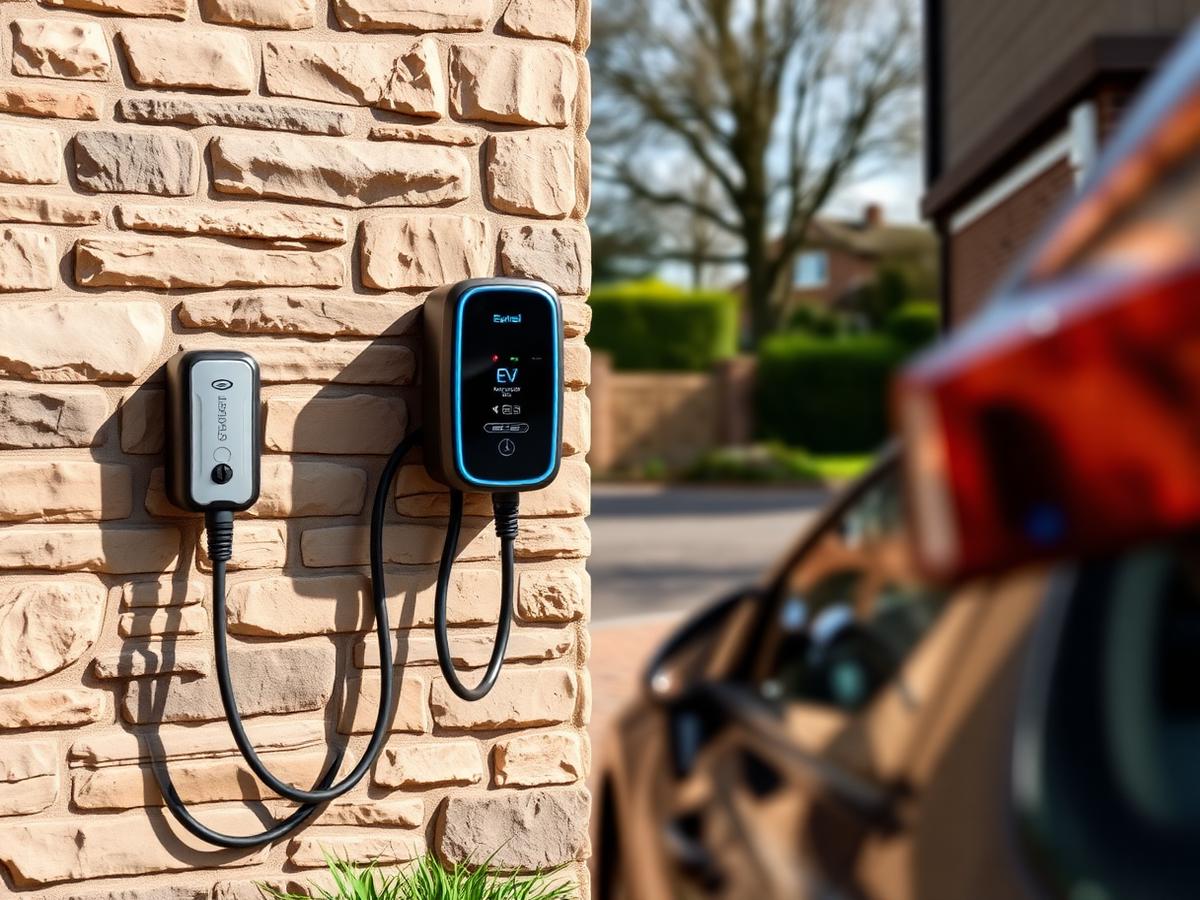
Home charging is straightforward if you have a driveway. Large parts of Glasgow do not. Here is an honest account of what can and cannot be done for a tenement flat, based on the jobs we actually get asked about in Govan, Partick, Dennistoun and Shawlands.
The three questions that decide it
- Can the cable run from your consumer unit to the parking position entirely within land you own or have a right to use? Trailing a cable across a pavement is not a lawful or safe solution, and no competent installer will sign it off.
- Does the building's supply have capacity? Tenement supplies are often smaller than modern houses, and the whole close may sit on a shared main. A 7kW charger with load management is frequently viable where an unmanaged one is not.
- Do you have the right to attach equipment to the building and to dig or fix in common ground? In a factored tenement, the external wall and the back court are almost always common property.
Where it usually works
Ground-floor and main-door flats with a private garden or an allocated back-court space are the realistic cases. If the parking space is genuinely yours and the cable route stays on your side of the boundary, a wall-mounted 7kW unit is normally a half-day job.
Converted flats with an allocated bay in a private car park are also usually fine, provided the factor or owners' association consents and the supply has headroom. In a shared car park it is often more sensible for the owners to install a small managed cluster than for each owner to run their own supply.
Where it usually does not
Upper-floor tenement flats with on-street parking, which is the majority case in the West End, Dennistoun and the Southside. There is no lawful way to get a cable from a second-floor flat to a public street, and gully channels cut into the pavement need local authority approval that is not generally available for private use.
If that is your situation, the honest answer is that home charging is not the route. Glasgow's public charging network, workplace charging and the rapid hubs are the practical options, and we would rather tell you that than take a deposit for a survey that was never going to work.
We will tell you on the phone whether your situation is viable before anyone books a survey. It takes two minutes and saves you a wasted appointment.
What a proper install includes
- A check of the incoming supply, main fuse rating and consumer unit capacity before anything is ordered.
- Earthing arrangements assessed — most modern units have integrated open-PEN protection, which matters on a TN-C-S supply.
- A dedicated circuit with the correct RCD protection, not a spur off an existing circuit.
- Load management where the supply is shared or tight, so charging backs off rather than tripping the main fuse.
- Notification and certification, and registration of any applicable warranty.