
Safety & compliance
Interlinked fire alarms: what the Scottish standard actually requires
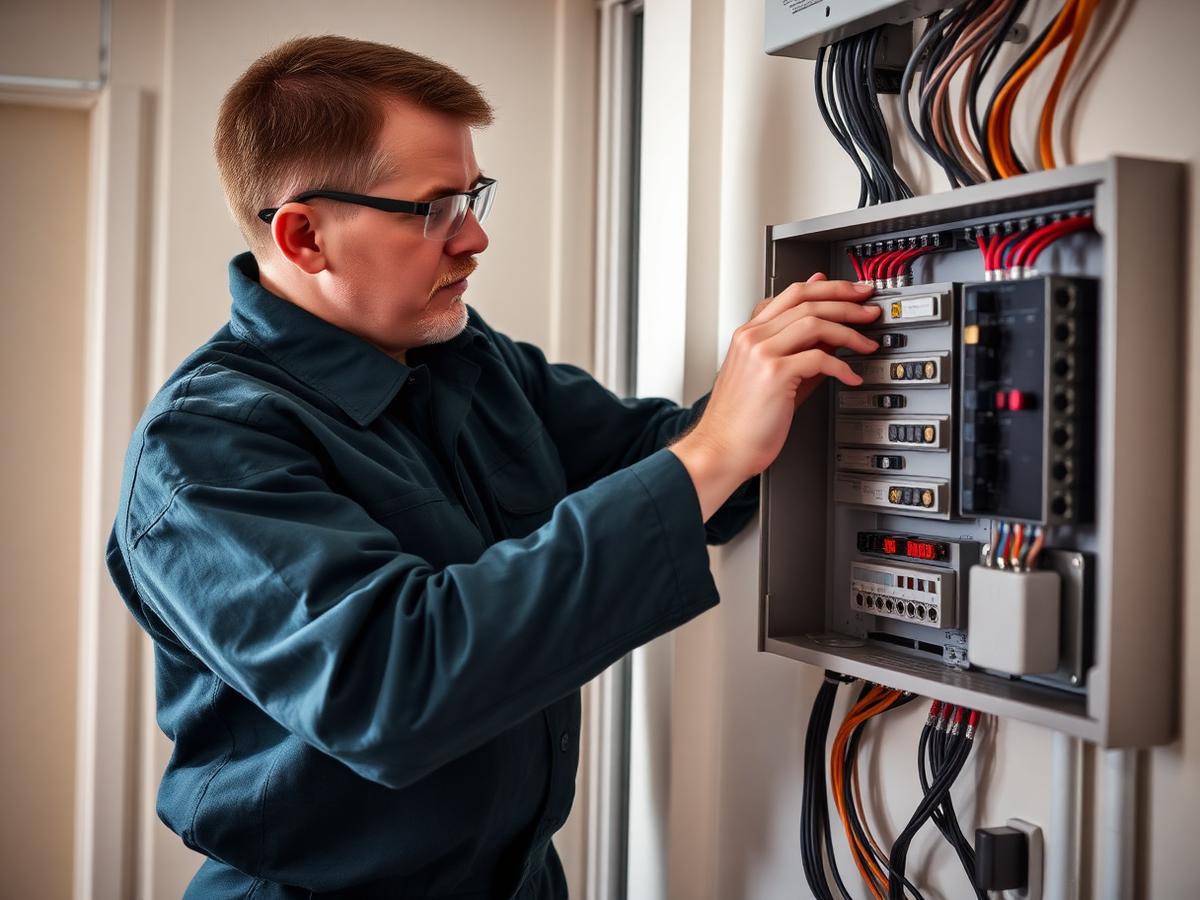
Since February 2022, every home in Scotland — owner-occupied as well as rented — has been required to have interlinked fire and smoke alarms. Interlinked means that when one alarm sounds, they all sound. A house full of individual battery smoke alarms that each only sound in their own room does not meet the standard, however new they are.
England has no equivalent requirement, which is why so much of the advice online does not apply here.
What a compliant installation looks like
- One smoke alarm in the room you use most during the day — usually the living room.
- One smoke alarm in every circulation space on each storey — hallways and landings.
- One heat alarm in the kitchen. A smoke alarm in a kitchen will nuisance-trip; a heat alarm is the correct device.
- All of the above interlinked, so any one triggering sounds all of them.
- A carbon monoxide alarm in any room containing a fuel-burning appliance — a gas boiler, a gas fire, a stove or a flue running through the room. CO alarms do not need to be interlinked with the fire alarms.
Ceiling-mounted, away from walls and away from the ventilation path. Alarms in the wrong position are a surprisingly common reason for a compliance check being failed.
Sealed battery or mains wired?
Both are acceptable. The standard permits hard-wired alarms, sealed tamper-proof long-life battery alarms, or a combination, as long as everything is interlinked. Interlinking can be done by wiring or wirelessly by radio frequency.
For most existing Glasgow homes — particularly tenement flats where chasing cables through solid walls is destructive and expensive — wireless sealed-battery units are the practical choice. A typical flat is a two or three alarm job and takes well under an hour. For a new build or a full rewire, hard wiring is straightforward and worth doing.
The important detail is that a mixed system only interlinks if the devices are designed to talk to each other. Alarms from different manufacturers generally will not pair. If you are topping up an existing setup, match the range you already have or replace the lot.
What this means if you let property
For landlords this is not optional and it is not new. Interlinked alarms are part of the Repairing Standard, and a property that does not meet it is not lawfully lettable. Alongside the alarms, private lets in Scotland need an annual gas safety check where there are gas appliances, and an Electrical Installation Condition Report at least every five years.
If you are arranging any of these, it is almost always cheaper and much less disruptive to your tenant to have them done in one visit rather than three separate appointments.